Running ads feels like doing something. You set a budget, pick an audience, launch the campaign, and suddenly your business is out there, visible, working even while you sleep. It's an appealing idea, and it's why paid advertising tends to be one of the first things SME owners reach for when they want to grow faster.
The problem is that ads don't create demand out of thin air. They amplify what's already there. If the right foundations are in place, ads can genuinely accelerate your growth. If they're not, you end up paying to send people toward something that isn't ready to receive them, and you get disappointing results that feel like an indictment of advertising in general, when the real issue was never the ads at all.
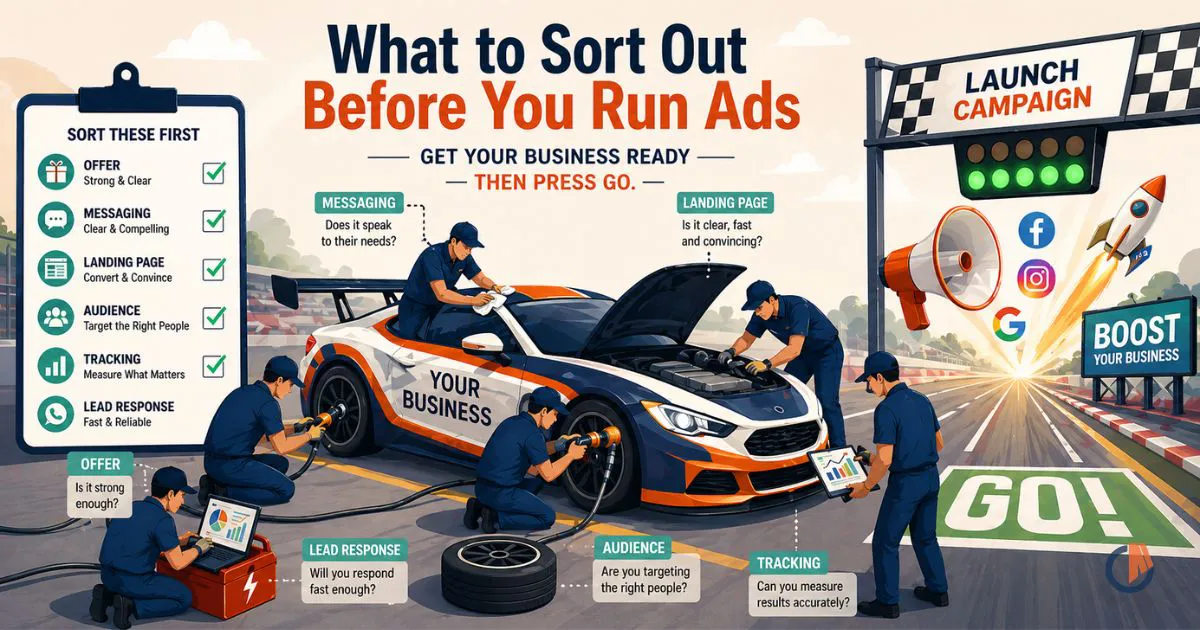
Before you spend anything on paid traffic, here's what actually needs to be sorted out first.
A Clear, Specific Offer
The first thing any ad needs is something concrete to promote. Not your business in general. Not a vague invitation to "find out more." A specific offer, with a clear outcome, aimed at a specific type of person.
This is where a lot of SMEs get stuck because they want to advertise everything they do, to everyone who might possibly be interested. That approach produces ads that are broad, uncommitted, and easy to scroll past. The ads that perform well are the ones that speak directly to one person with one clear problem and one specific solution. The more precisely you can define what you're offering and who it's for, the better your ad will perform, because the right people will immediately recognise that it's meant for them.
If you can't describe your offer in a single, plain sentence that a stranger would immediately understand, that's the first thing to work on before anything else. "We help small business owners in Malaysia get more customers through social media" is a start. "We run Facebook and Instagram ads for F&B businesses in the Klang Valley looking to increase dine-in reservations" is sharper, more specific, and far more likely to make the right person stop scrolling.
A Landing Page That Does Its Job
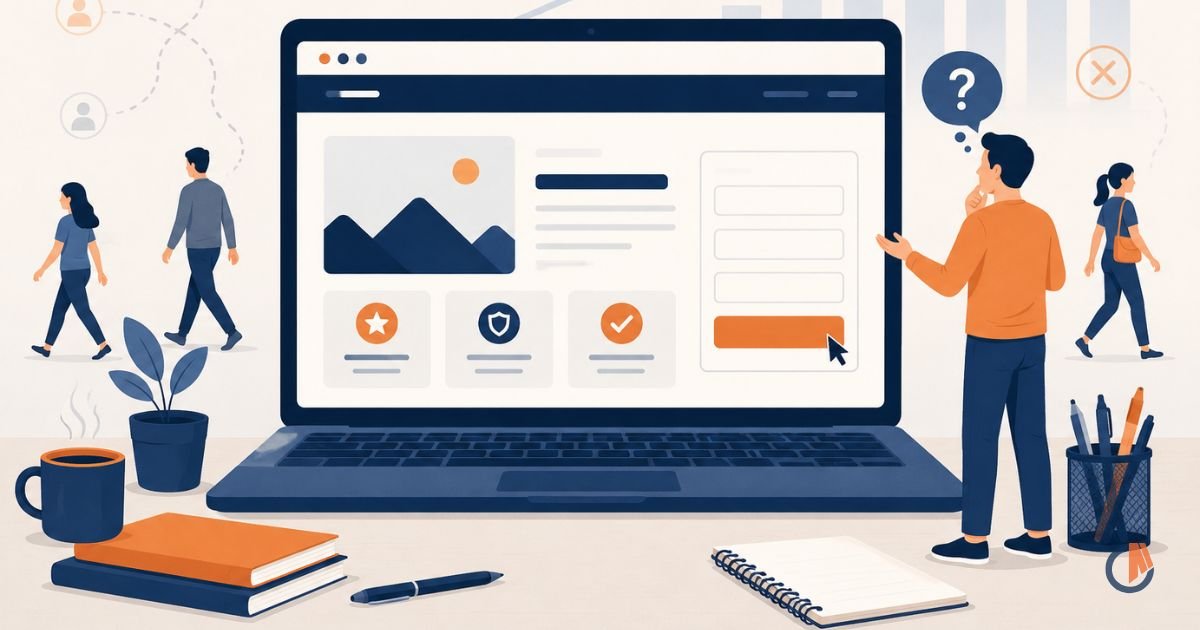
Once someone clicks your ad, the ad has done its job. Everything that happens next is determined by where you send them. And this is where an enormous amount of ad spend quietly disappears, because the destination isn't ready to convert.
Sending ad traffic to your homepage is almost always a mistake. Homepages are designed to give an overview of a business, not to move a warm, interested prospect to a specific action. When someone clicks an ad about a specific offer and lands on a general homepage, the momentum breaks. They have to figure out where to go next, and most won't bother.
A proper landing page is built around one goal. It speaks directly to the person the ad was targeting, it reinforces the promise the ad made, and it makes the next step completely obvious. That next step should be one thing only, whether it's filling in an enquiry form, booking a call, or sending a WhatsApp message.
Every other distraction, extra links, unrelated services, lengthy company history, should be stripped away. The job of a landing page is to take a warm click and turn it into a conversation or a sale. If yours isn't doing that, fixing it before you spend on ads will have a bigger impact than any targeting tweak or budget increase.
A Follow-Up Process That Actually Follows Up
This one gets overlooked more than almost anything else. You run ads, leads come in, and then... what happens? If the answer is "we get back to them when we can" or "we send a reply and wait to hear back," there's a significant amount of potential revenue slipping through.
Speed matters more than most people realise. Research consistently shows that a lead contacted within the first few minutes of enquiring is far more likely to convert than one contacted hours later, because people in a buying mindset often enquire with multiple businesses at the same time and go with whoever responds first and most helpfully. By the time you reply the next morning, they've already had a conversation with a competitor and made a decision.
Before you start driving paid traffic, map out exactly what happens the moment a lead comes in. Who responds, how quickly, through which channel, and what do they say? Is there a follow-up if the lead doesn't reply to the first message? Is there a second touchpoint a few days later for leads that went quiet? These don't have to be complicated systems. Even a simple, fast, genuinely helpful response process will outperform a polished ad campaign that feeds into a black hole on the other end.
A Message That Matches What You're Selling
There needs to be a consistent thread running from your ad creative through to your landing page through to your follow-up conversation. If the ad promises one thing and the landing page talks about something else, or if the tone in the ad is warm and personal but the follow-up message sounds like a corporate template, people feel the disconnect. It erodes the trust the ad worked hard to build, and trust is what moves people to act.
This consistency is called message match, and it's one of the most practical things you can check before launching any campaign. Read your ad copy, then read your landing page, then read your follow-up message, and ask yourself if they feel like they're from the same conversation. The offer, the language, the tone, and the promise should all align. If they don't, the friction at each stage compounds and your conversion rate suffers at every step of the funnel.
Some Sense of Your Numbers
You don't need a finance degree to run ads sensibly, but you do need a basic understanding of what the numbers need to look like for advertising to make sense for your business.
The most important number is how much a new customer is worth to you. If your average sale is RM500 and a customer typically buys once, your economics are very different from a business with a RM500 first sale and an average customer lifetime value of RM5,000. Both businesses could run ads profitably, but at very different allowable costs per lead and cost per acquisition.
If you don't know roughly what you can afford to pay to acquire a customer and still make money, you have no way of evaluating whether your ads are working or not. You'll either pull the plug too early because it feels expensive, or keep spending on something that was never going to be profitable to begin with. Work out your numbers first, even roughly, so you have a benchmark to measure against once the campaign is live.
Realistic Expectations About the Timeline
Paid advertising, done well, can produce results relatively quickly compared to organic marketing. But "relatively quickly" does not mean overnight, and this is a mismatch in expectations that causes a lot of SME owners to give up on campaigns that were actually heading in the right direction.
Most ad platforms need time to optimise. The algorithm learns who is responding to your ads, what creative is performing, and when your audience is most active. That learning period takes time and costs money before it pays back. On Meta, for example, it's common for the first two to four weeks of a new campaign to look underwhelming while the system figures itself out. Pulling the campaign at week two because it hasn't produced enough leads yet is like turning off the oven before the food is cooked.
Go into advertising with a clear testing budget and a realistic window. Decide upfront how long you'll run the campaign before evaluating results, and what specific metrics you'll use to make that call. This stops emotional decisions from killing campaigns prematurely, and it also protects you from throwing good money after bad on something that genuinely isn't working.
Basic Tracking in Place
If you can't measure it, you can't improve it. Before your first ad goes live, make sure the basic tracking is set up so you know what's actually happening after someone clicks.
At a minimum, you want to know where your leads are coming from. If you're running ads on Meta and Google at the same time, and leads are coming in, which platform is driving them? Which ad? Which audience? Without tracking, you're splitting your budget between channels with no way of knowing which one deserves more and which one is wasting your money.
You don't need anything complicated to start. Google Analytics on your website, a Meta pixel firing on your thank-you page, and UTM parameters on your ad links will give you enough visibility to make meaningful decisions. Set this up before you spend, not after, because data from day one is far more useful than data from week three when you finally got around to installing the pixel.
The Ads Come Last, Not First
The reason so many SMEs feel burned by paid advertising is that they treated it as the starting point rather than the final layer. Ads are not a substitute for a clear offer, a converting landing page, a working follow-up process, and an understanding of your numbers. They're an accelerant. Put them on top of something that's already working, even in a small way, and they can produce impressive results. Put them on top of something that hasn't been thought through, and all they do is speed up the rate at which your budget disappears.
Go through the checklist honestly. If any of these areas needs work, do that work first. It's less exciting than launching a campaign, but it's the difference between advertising that builds your business and advertising that just costs you money.
Not Sure If You're Ready to Run Ads?
This is one of the most common conversations we have at Creative Mojo. A business owner wants to start advertising but isn't sure if the right things are in place, or they've already run ads that didn't deliver and can't figure out where it went wrong.
Either way, it starts with an honest look at what's there before any budget gets committed. If you'd like a second pair of eyes on your setup before you spend, or if you want to work out what actually needs to happen first, get in touch with us here. A short conversation now can save you a lot of wasted budget later.
Is this your situation right now?
If you are spending on marketing but not seeing the returns, a clarity conversation is usually where we start. Tell us about your business and we will give you an honest read on what is going on.
Book a Free Discovery Call